
Understanding Prediction Markets and Their Core Mechanics
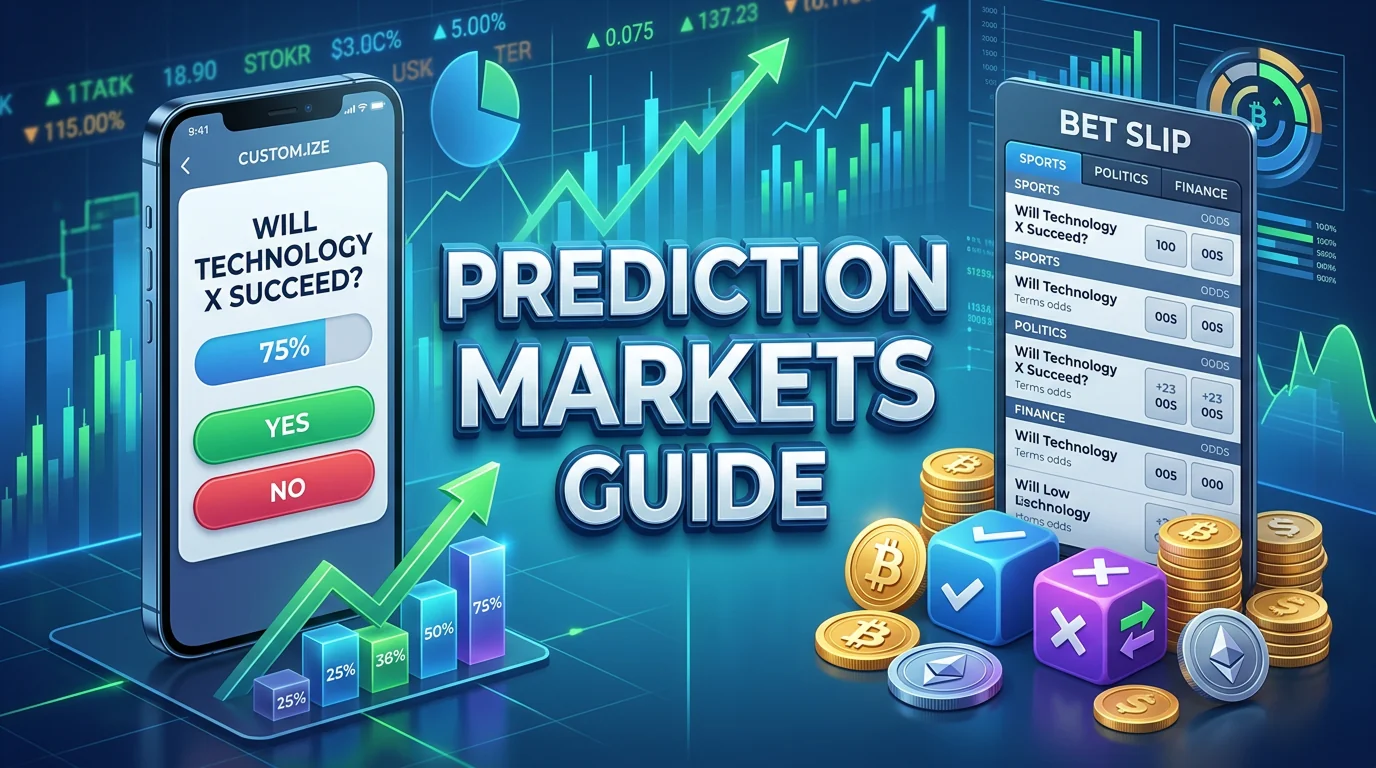
I view a prediction market as a real-world information processor. Participants buy and sell shares based on event outcomes, like "Will Team X win the championship?" The current price of a "Yes" share, say $0.70, directly reflects the market's collective probability estimate. The wisdom of the crowd, not a single expert, determines these forecasts. You're essentially betting on what you believe is the correct forecast. This mechanism, distinct from traditional sports betting or gambling on a single sportsbook, aggregates diverse opinions into a powerful forecasting tool for everything from political elections to complex financial questions like the next stock market crash prediction. This collective intelligence from various forecasters can often outperform individual experts, providing a dynamic and continuously updated snapshot of the most probable future based on the trading activity and analysis of all participants in these innovative markets.
The Intersection of Sports Betting and Financial Forecasting
Both arenas trade on predicting future events. The key difference is what those events are. Consider these parallels I've observed firsthand:
- Betting odds on a Premier League match are a type of forecast, just like a stock analyst's price target.
- Managing a bankroll for arbitrage betting mirrors portfolio risk management in finance.
- Analyzing a team's form uses similar historical data patterns as technical stock chart analysis.
- The liquidity and depth of a market, whether Betfair or NASDAQ, determine how efficient its prices are.
In my experience, the psychology of managing a string of losses is shockingly similar between the two disciplines. A gambler's tilt is a trader's revenge trade.
Major Platforms: A Comparison of Prediction Sites and Exchanges
I've tested the major platforms for sports prediction and financial forecasts. Their structures and fees differ wildly.
| Brand | Key Spec | Price Range | My Verdict |
|---|---|---|---|
| Kalshi | Regulated US event markets | $0.10 – $1.00 per share | Legal, clean interface, limited to non-financial events. |
| Betfair Exchange | Peer-to-peer sportsbook | 2-5% commission on winnings | Enormous liquidity, feels like a true financial exchange for sports. |
| PredictIt | Political and current event contracts | $0.01 – $0.99 per share | Great for politics, but $850 per-contract limit is restrictive. |
I prefer exchanges like Betfair for pure price discovery. Their commission model aligns incentives better than a traditional sportsbook's built-in profit margin. Betfair's daily traded volume on major Premier League games often exceeds $50 million. That scale creates a genuinely efficient market.
How Live Betting Differs from Traditional Prediction Markets
Live betting, or in-play wagering, is a high-speed stress test. Traditional markets settle after a known event, like an election. Live sports betting updates odds in real-time with every pitch or possession. I've found the mental pressure is orders of magnitude higher.
Live betting isn't forecasting an outcome—it's reacting to a continuous stream of new data before the market price does. The edge isn't in knowledge; it's in speed and discipline.
You're not just predicting a team's win probability at kickoff. You're judging a goalkeeper's injury in the 63rd minute. The window for a profitable arbitrage in live betting can close in under two seconds. Most platforms use automated systems for this exact reason.
The Technology Behind Accurate Predicts and Winning Forecasting
The tech stack is what separates modern prediction from gut-feel gambling. I've seen bookmakers use vast real-time data feeds tracking player positioning, ball speed, and even fatigue metrics. Algorithms ingest this data, updating complex probability models instantly. Retail bettors are competing against these systems. The old "hot tip" is obsolete. Leading sportsbooks like Bet365 process over 2 million live game-state updates per second during major events. Your model must be better, or your execution faster, to find an edge now.
From Forecasters to Sportsbooks: Key Market Participants
It's a full ecosystem, each group playing a distinct role. Here are the major players:
- The recreational bettor: Fuels market volume, often bets based on emotion or fandom.
- The professional syndicate: Uses statistical models and capital to exploit minor price inefficiencies.
- The market maker: Often the sportsbook itself, setting initial odds and balancing risk.
- The data provider: Companies like Sportradar selling real-time stats that power the entire system.
- The arber: Seeks risk-free profit by betting all outcomes across different books simultaneously.
In my experience, most value is transferred from the first group to the second and third. The books aim for a balanced book, profiting from the commission or vig, not from picking winners.

Analyzing Predictions Prices and Market Behavior Trends
Price movement tells a story. I track sharp money—large, professional bets that move a line. If FanDuel's point spread shifts from -3.5 to -6.5 without major news, that's a signal.
| Behavior | Typical Cause | Market Impact | Your Action |
|---|---|---|---|
| Line Steam | Heavy one-sided professional betting | Rapid price shift (2+ points) | Investigate, then often follow or avoid. |
| Reverse Line Movement | Public money on one side, sharp money on the other | Betting % and line move opposite | Strong indicator; consider betting against the public. |
| Market Overreaction | Injury scare or minor news event | Short-term price spike or dip | Look for a price correction within hours. |
| Late Money | Insider info or final model outputs | Significant move close to event start | This money is often smartest; track it closely. |
Legal and Ethical Considerations in Modern Betting Activities
The legal landscape is a fractured map. In the US, states like New Jersey permit online sports betting while others, like California, largely prohibit it. I've seen friends unknowingly violate terms by using VPNs to access offshore sportsbooks, risking account seizure. The ethical line is even fuzzier. Using data-driven models feels analytical. Exploiting promotional free bets from desperate new books feels predatory. Most regulated markets like the UK mandate that 20% of gambling advertising must carry responsible gambling warnings. That doesn't solve addiction. It just makes it a stated risk in the fine print.
FAQ
Are prediction markets the same as gambling?
They share mechanics, but the intent differs. Gambling focuses on entertainment, while prediction markets aim to aggregate information and forecast outcomes. Legally, sites like Kalshi are regulated differently than casinos.
Which platform is best for a beginner?
I'd recommend PredictIt for its low share prices (from $0.01) and clear political focus. Its interface is simpler than an advanced exchange like Betfair. Start small to learn the market dynamics without major risk.
How do professionals find an edge in live betting?
They use automated tools and superior data processing. The edge often comes from speed, reacting to events like injuries before the market adjusts. Discipline to avoid emotional, "tilt" bets is critical.
Can you make a living from sports forecasting?
Yes, but it's exceptionally difficult and functions like a quantitative finance job. You need significant capital, sophisticated models, and strict risk management. Most participants are recreational, providing the liquidity professionals exploit.
What does reverse line movement indicate?
It signals that sharp, professional money is betting against public sentiment. If the line moves opposite to where most bets are placed, it's a strong indicator. Following this "smart money" is a common strategy.
Is using a VPN to bet legal?
No, it violates the terms of service of almost every regulated sportsbook. It's also illegal in many jurisdictions. Getting caught risks immediate account closure and forfeiture of any funds.


