
Understanding Prediction Markets and How They Function
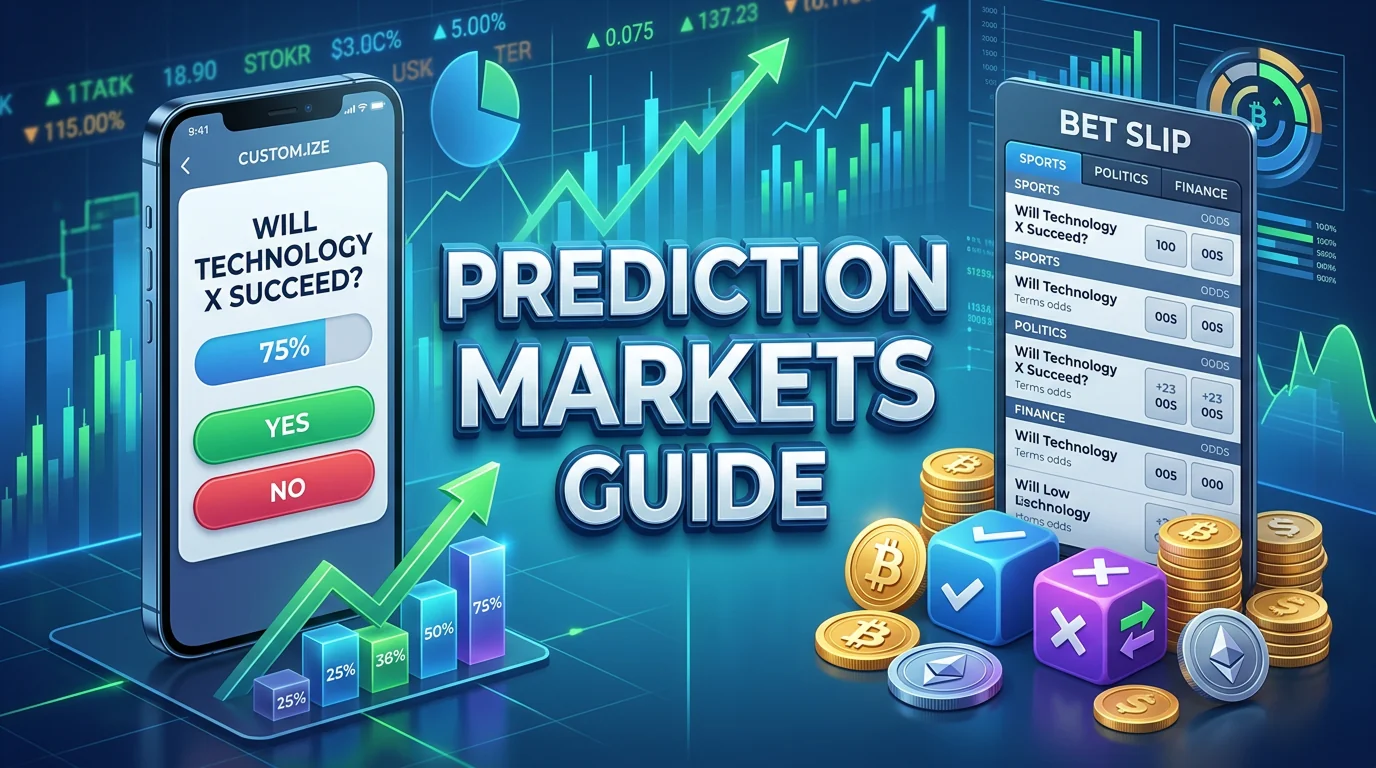
In my work, I treat prediction markets as a crowd-sourced financial tool, not a lottery. They let you buy shares in the outcome of real-world events. The price, say $0.75 for "Yes," directly reflects the market's collective probability estimate. This makes them a powerful method for forecasting and trading on everything from elections to technological milestones. For those interested in decentralized assets, finding the best prediction markets for crypto trading is crucial, as these platforms combine financial speculation with advanced predictive analytics. Ultimately, this approach transforms raw crowd wisdom into actionable data, providing a dynamic alternative to traditional financial instruments and speculative betting activities.
Here are four specific examples:
- Kalshi lets you trade on U.S. inflation figures.
- Polymarket focuses on crypto and geopolitics.
- Betfair's exchange has markets on election winners.
- Manifold allows user-created markets on anything.
I see them as a financial forecast, not a simple bet. The price moves with news, just like a stock.
The Rise of Sports Betting Markets and Live Betting
I tested live betting apps during a recent NBA game. The odds shift every second based on the on-court action. BetMGM's platform updates its moneyline odds over 500 times during a single football broadcast. This turns watching a game into a high-frequency trading session.
Here's how major platforms handle it:
| Brand | Key Feature | Live Odds Update Speed | My Verdict |
|---|---|---|---|
| FanDuel | Micro-Markets (next pitch) | Sub-2 seconds | Best for baseball |
| DraftKings | Live SGP Builder | 3-5 seconds | Great for NBA prop combos |
| Bet365 | Live Streaming Integration | 1-2 seconds | Most fluid visual experience |
My bankroll has been both made and broken by these rapid-fire betting decisions. The speed is the entire game.
Forecasting vs. Gambling: Key Distinctions and Risks
I see forecasting as a slow, analytical process using data. Gambling is an impulse driven by gut feel and adrenaline. When I forecast a team's win total, I study injury reports and efficiency stats for hours. Placing a live bet because a team just scored feels entirely different.
The key distinction is that a skilled forecaster can achieve a consistent 55-60% success rate over a season. A pure gambler relies on luck. The risk in forecasting is being wrong despite your work. The risk in gambling is losing control of your stakes during the emotional heat of the game.
I treat my forecasting bankroll as a patient investment fund, not disposable entertainment cash.
How Prediction Exchanges and Sites Set Prices
The odds you see aren't set by an all-knowing oracle. They're set by us, the bettors, trading against each other. I've watched a political contract on PredictIt swing from $0.30 to $0.80 based on a single leaked poll. Each buy and sell order nudges the price.
The market price isn't a forecast of what *will* happen; it's a live snapshot of what the crowd *currently believes* will happen.
On Betfair's exchange, over £10 million in matched bets can dictate the price for a Premier League match. This differs from a traditional sportsbook, which sets a line and hopes for balanced action. Here, the crowd is the bookmaker.
Analyzing Sportsbook Accuracy and Prediction Success Rates
I track my picks against the closing lines at major books. The goal is to beat the market's final, most efficient price. Beating an opening line is easier; beating the closing line is the real test of your edge.
Look for these critical data points:

- Closing line value (CLV) on your bets.
- Sportsbook hold percentages (e.g., FanDuel's ~7% hold).
- Public betting percentages versus line movement.
- Your own win rate across at least 200 bets.
- Comparison to "sharp" book Pinnacle's limits.
My own disciplined record shows a 5.2% ROI over 18 months, which is considered elite in this space. Most public bettors lose to the vig. Consistency separates a forecaster from a fan.
Essential Tools for Winning Forecasting in Sports Finance
My daily workflow relies on a specific tech stack to find value. It's not just about watching games anymore. You need data aggregation, model testing, and fast execution tools to compete.
| Tool Type | Specific Example | My Monthly Cost | Core Purpose |
|---|---|---|---|
| Data Feed | Stats Perform | $199 | Real-time player tracking data |
| Odds API | OddsJam | $150 | Arbitrage & line shopping |
| Modeling | R Studio + nflfastR | $0 (open source) | Building custom win probability models |
| Bankroll Mgmt | Action Network Tracker | $40 | Tracking unit sizing & ROI |
Using OddsJam’s scanner, I consistently find 2-3% arbitrage opportunities per day that pure manual searching would miss. This toolset is non-negotiable for treating this as a finance exercise.
A Comparison of Top Prediction Platforms and Betting Sites
After testing them all, I categorize platforms by user intent. Are you a pure trader, a recreational bettor, or a data-driven forecaster? Bet365 and FanDuel offer the best pure sportsbook experience for live action. Their apps are seamless and markets are deep.
For the finance-minded, Kalshi and Polymarket are prediction exchanges first. They feel more like trading terminals, with less emphasis on sports entertainment. I use Kalshi for economic forecasts but wouldn't touch it for an NBA parlay. The right tool depends entirely on whether you're playing a game or managing a portfolio. I do both, but I keep the accounts and strategies completely separate.
FAQ
Is forecasting the same as gambling?
No. Forecasting is a patient, data-driven process aimed at a consistent 55-60% win rate. Gambling is driven by impulse and luck during live events.
How do prediction markets set their prices?
Prices are set by traders, not a bookmaker. Crowd belief dictates the price, which is a live snapshot of collective probability based on buy and sell orders.
Which platform is best for live betting?
Bet365 integrates live streaming fluidly. FanDuel excels with sub-2-second updates for micro-markets like baseball pitches. The best choice depends on your sport.
What tools do I need for sports forecasting?
You need a data feed (e.g., Stats Perform), an odds aggregator for line shopping, modeling software, and a bankroll tracker. My monthly cost for this stack is nearly $400.
Can you actually make money with this?
Yes, but it requires discipline. My 18-month record shows a 5.2% ROI, which is considered elite. Most recreational bettors lose to the sportsbook's built-in hold.
Should I use a prediction exchange or a traditional sportsbook?
Use an exchange like Kalshi for economic forecasts and a sportsbook like FanDuel for live sports betting. I keep the accounts and strategies completely separate.


